
If you are weighing a ductless mini split against central air conditioning, you are asking the right question. These two systems work differently, cost differently, and perform better in different situations. The answer is not the same for every home.
This guide gives you a straightforward, honest comparison of both options, built specifically for South Louisiana homeowners. By the end, you will know which system fits your situation and why.
How Each System Works
Central air conditioning uses a single outdoor unit connected to your home’s duct system. The outdoor unit cools refrigerant, which travels to an indoor air handler or coil. A blower pushes conditioned air through supply ducts to every room. Return ducts bring air back to the system to be cooled again.
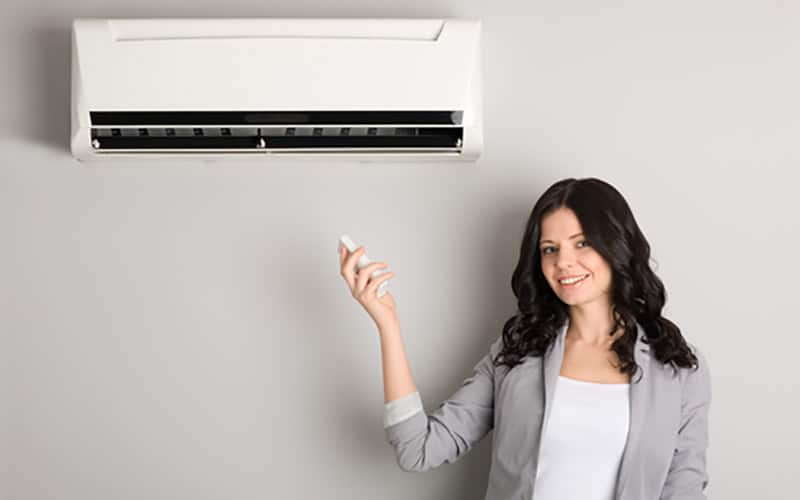
A ductless mini split also has an outdoor unit, but instead of feeding into a duct network, it connects directly to one or more indoor air handling units mounted on walls, ceilings, or floors. There are no ducts involved. Each indoor unit conditions the room or zone it is installed in independently from every other zone.
Both systems can provide both heating and cooling. Both use refrigerant. The key difference is how they distribute air, how many zones they serve, and how much energy is lost between the equipment and the space being conditioned.
Cost at a Glance
| Ductless Mini Split | Central Air | |
| Upfront cost | Higher per zone ($3,000 to $5,000+ installed) | Lower for whole-home ($5,500 to $12,000+ installed) |
| Operating cost | Generally lower (no duct losses) | Varies; duct losses add 20 to 30% |
| Installation disruption | Minimal (no ductwork) | Significant if ducts need work |
| Lifespan | 15 to 20 years | 12 to 17 years |
| Best for | Specific zones, no ductwork, additions | Whole home with existing good ducts |
The Pros of a Ductless Mini Split
Higher Efficiency and Lower Monthly Bills
Mini splits are among the most energy-efficient HVAC systems available. Many models reach SEER2 ratings above 20, with premium units reaching 30 or higher. A high-efficiency central AC typically reaches 18 to 22 SEER2.
The efficiency gap comes from ductwork. When conditioned air travels through ducts to reach your rooms, some escapes through leaks and absorbs heat through duct walls along the way. Research consistently shows duct losses account for 20 to 30 percent of cooling energy in a typical home. Mini splits eliminate this loss entirely because the refrigerant travels to the zone and the air handler is already in the space being conditioned.
In Baton Rouge, where your cooling system runs seven or eight months of the year, that efficiency difference translates into meaningful monthly savings.
Built-In Zoning
Each indoor unit in a mini split system operates independently. The bedroom can be at 72 degrees while the guest room is at 78, or switched off entirely. You only condition the spaces where people actually are.
To get true zoning with central air, you need to add dampers, multiple thermostats, and a zone controller, which adds high cost. With a mini split, zoning is built in from the start.
For Baton Rouge families where different household members prefer different temperatures, or homes where certain rooms absorb significantly more sun than others, this flexibility is a real daily advantage.
No Ductwork Needed
Some Baton Rouge homes were built before central air was standard and have never had ductwork. Others have had additions, sunrooms, or converted garages that were never connected to the central system. For all of these spaces, a mini split installation requires only a small hole in the wall for the refrigerant line and electrical connection. No major construction, no ripping open ceilings.
Our ductless mini split installation team can have a single-zone system installed in one day without major disruption to your home.
Excellent Humidity Control
Variable-speed mini splits run at whatever level the room needs rather than cycling fully on and off. Running longer at lower speed means the indoor coil stays cold for extended periods, which pulls far more moisture out of the air than a system that cycles quickly.
For Baton Rouge homeowners who describe their home as constantly feeling sticky even with the AC running, a variable-speed mini split frequently solves the problem better than any other approach. In a city where humidity is oppressive for most of the year, the dehumidification advantage of variable-speed technology is significant.
Heats and Cools in One System
Every mini split is a heat pump. It cools in summer and heats in winter. South Louisiana’s mild winters are ideal for heat pump operation. Baton Rouge temperatures rarely stay below freezing for extended periods, which means a mini split can handle the vast majority of your heating needs efficiently, without ever relying on backup electric heat strips for more than a few days per year.
A mini split can replace both your air conditioner and your primary heating system, which simplifies your equipment and can reduce total investment if both need replacing.
The Cons of a Ductless Mini Split
Higher Upfront Cost Per Zone
A single-zone mini split covering one room typically costs $3,000 to $5,000 installed. Multi-zone systems covering several rooms add up. For whole-home coverage in a larger Baton Rouge home, the total investment for a multi-zone mini split can exceed what a central AC system would cost for the same square footage.
Visible Indoor Units
Mini split indoor units are visible on the wall, ceiling, or floor of the room they serve. Modern units are significantly more discreet than older models, but they are still visible fixtures. Some homeowners find this acceptable without a second thought. Others find it disruptive in formal living spaces.
Each Zone Needs Its Own Indoor Unit
Covering multiple rooms requires multiple indoor units. A three-bedroom home needs at least three indoor units to serve all the bedrooms, plus units for living spaces if needed. For targeted applications, this is not a problem, but it is a real consideration for whole-home coverage.
The Pros of Central Air
Lower Upfront Cost for Whole-Home Coverage
For a home with existing ductwork in good condition, central AC installation delivers whole-home comfort for less upfront than a multi-zone mini split system covering the same square footage. This is the clearest advantage central air has in most Baton Rouge homes.
Familiar, Simple Operation
Most Baton Rouge homes already have central air. One thermostat, one system, every room receiving conditioned air. For homeowners who want simplicity without thinking about zone management, central air delivers that in a straightforward package.
Whole-Home Air Filtration
Central air systems pull all of the air in your home through a filter repeatedly throughout the day. This constant filtration, especially with a good filter media or an added air scrubber, can meaningfully improve indoor air quality. Mini splits filter only the air in the zone each unit serves.
The Cons of Central Air
Duct Energy Losses
This is central air’s biggest weakness. Ducts running through attics, crawl spaces, and wall cavities lose conditioned air through leaks and absorb heat through duct walls. Research estimates these losses at 20 to 30 percent of cooling energy. In Baton Rouge, where older homes frequently have significant duct leakage, this represents real money wasted every month.
Duct sealing and duct repair can reduce these losses significantly, but rarely eliminate them entirely.
No Zoning Without Extra Equipment
A standard central air system treats your whole home as one zone. Every room gets the same call for cooling whether or not anyone is there. Adding true zoning requires dampers, a zone controller, and additional thermostats, which adds complexity and cost.
Requires Ductwork
If your home does not have ducts, installing a central system means building an entire duct network in a finished house. This is invasive, expensive, and disruptive. Mini splits are almost always the better choice for homes without existing ductwork.
When a Mini Split Makes More Sense in Baton Rouge
- Room additions and converted spaces (garages, sunrooms, bonus rooms) not connected to the existing duct system
- Older homes without ductwork
- Homes where one or more rooms are always too hot or too cold regardless of the thermostat setting
- When replacing both AC and heating at the same time with a combined system
- When humidity control is a top priority (variable-speed mini splits excel here)
- When whole-home duct losses from older ducts are driving high energy bills
When Central Air Makes More Sense in Baton Rouge
- Your home already has ductwork in good condition
- You want the simplest whole-home setup with one thermostat
- You are doing new construction where ducts can be designed and installed correctly from the start
- Budget requires the lower upfront cost of central AC for whole-home coverage
Can You Have Both?
Absolutely. Many Baton Rouge homeowners run central air for the main living areas and add one or two mini split units for spaces that need independent control, a home office, a sunroom, a primary bedroom where someone runs warmer than the rest of the house. This hybrid approach gets the cost efficiency of central air for most of the home with the precision of mini splits where it matters most.