
If you’re facing the winter season with an older or frequently malfunctioning furnace, you might be feeling the pressure. No one wants to get stuck in the middle of a cold front with no heat, and a furnace replacement might be your best option for reliable heating! But, where do you start? What heating system works best for your home and your budget?
Southern Air Heating, Cooling & Plumbing is here to help you through it all. One of the biggest decisions you’ll have to make is choosing between the types of furnaces: gas or electric furnaces. What’s the difference between these two systems? Keep reading to find out how furnaces work and weigh the pros and cons of electric vs gas furnaces.
How Do Furnaces Work?
The main understanding that most homeowners have about their heating systems applies to both electric and gas furnaces. When the temperature in your home falls below the number set on your thermostat, a sensor signals the furnace to turn on. Once the air is heated, it is pushed back into your home until the sensor is satisfied that the space has reached the desired temperature. How the furnaces actually heat the air is where the two systems start to differ.
Electric Furnaces
Just in case the name isn’t clear, the source of fuel that electric furnaces use is electricity! Your electric furnace will be connected to the electrical system in your home and contribute to your energy bill every month. When the sensor in your home is triggered, the furnace turns on and allows electricity to flow over metal coils inside the unit. Since electricity creates heat, the metal coils become hot. When air from your home passes over these coils, the heat is transferred to the air. The warm air is then pushed by fans back through the ductwork and into your home.
Gas Furnaces
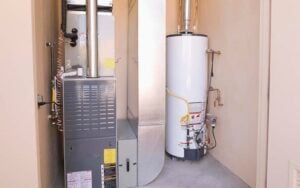
Gas furnaces burn natural gas supplied by an underground utility line or, in homes without gas service, propane from a storage tank outside. When the furnace turns on, gas is pumped into the unit through a pipe. An ignitor creates a controlled flame or heats a metal plate. This causes the gas to burn, creating heat. The heat exchanger, a series of thin-walled metal tubes, separates the combustion area from the rest of the furnace. The metal of the heat exchanger heats up like the coils in an electric furnace. As air from your home passes over the heat exchanger, the heat is transferred to the air. The warm air is then blown through the ductwork back into your home.
Pros & Cons of Furnaces
Availability of electricity versus natural gas may make the decision for you. If you have access to both, you may need more help determining the best option. Besides the fuel source, gas and electric furnaces each have their own set of pros and cons that could influence which system you choose for your home.
Expense
Electric furnaces are usually going to be cheaper upfront to purchase. However, electricity is more expensive than gas. This means that operating your furnace will be much cheaper if you only have to pay for natural gas or even propane.
In Louisiana, the cost gap is smaller than in most of the country. The state’s average residential electricity rate has been among the lowest in the U.S. throughout 2026, and Baton Rouge winters are short and mild, so a furnace may only run for a few cold weeks each year. For many local homes, that makes the lower upfront cost of an electric furnace more appealing. Homes that already have a gas line still tend to see lower heating bills with a gas furnace during cold snaps.
Lifespan
Electric furnaces have fewer moving parts and no combustion, so with regular maintenance, they often last 20 to 30 years. Gas furnaces typically last 15 to 20 years.
Efficiency
Electric furnaces turn nearly all of the electricity they use into heat, which makes them close to 100% efficient at the unit. Gas furnaces lose some heat through the vent, so their efficiency ratings are lower. Efficiency is not the same as operating cost, though: what you pay each month depends on local electricity and gas prices.
Safety
In the process of burning natural gas, carbon monoxide is produced. While your furnace is designed to expel all CO out of your home, malfunctions with your unit can lead to CO leaks in the home. Electric furnaces still pose a small fire risk, but they don’t use gas so there’s no risk of CO poisoning.
Professional Furnace Installation
No matter what kind of furnace you decide to invest in, you’ll need a top-notch heating installation company to get your new system running. Southern Air Heating, Cooling & Plumbing is proud to offer premier heating services to the community. We’re just a phone call away! Contact us today to get your service request started.